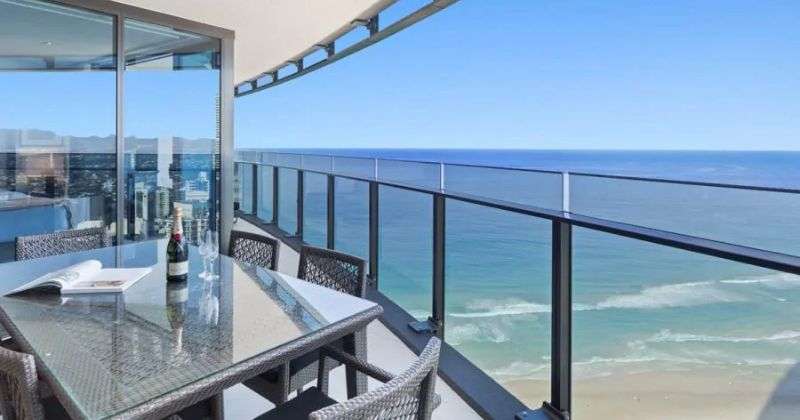
Should an owner pay an apartment view tax just because their apartment has a better view? Different councils around Australia apply different methods to calculate their rates. Some apartment owners pay higher rates because their apartment is more valuable. Is that fair? Or should all apartments attract the same rates?
I recently discussed this issue on 3AW. In Victoria, council rates are usually a percentage of the capital improved value of the property. The City of Melbourne uses net annual value
(NAV) or rental value as it more accurately differentiates value between the various types of property like retail, commercial office, apartments and hospitality uses. Generally however, in Victoria the council rates are assessed on the relative value of each property.
In other councils around Australia the apportionment between apartments may differ. For example, the Gold Coast Council has just switched from a flat rate across an entire apartment building, to a value based rate allocation. Previously every apartment in a building paid the same rate. This means some apartments are now getting hit with a 40% rate increase.
The view is not the only thing that drives an apartment’s value and therefore rates. An apartment’s orientation, configuration, outdoor area, and obviously total size all impact its value. The Gold Coast Council is catching up with Victoria and many other councils where the rates are calculated on the value of the apartment rather than a flat amount.
Here is a quick refresher on Victorian council valuations and rates…
Every property in Victoria is valued annual by the council on three different bases. If you look at your council rates notice you will see these 3 valuations.
- Capital Improved Value (CIV): The total value of the land and all improvements on it, such as buildings. This is similar to the apartments market value.
- Site Value (SV): The value of the land only. To calculate the site value for an apartment, divide the total land value of the apartment development by each apartment’s relative rental value.
- Net Annual Value (NAV): The annual rental value of the property, (often 5% of the CIV)
(Thanks to Patel Dore, Eishold Property and Scrivener Forsyth for helping me with the finer details on these ones. 🙏)
The rating valuations are also used for other purposes. Most notably site value is used to calculate land tax. With the recent change in land tax where the site value threshold was dropped from $300,000 to $50,000, many apartment owners are getting a land tax bill this year for the very first time and are asking a lot of questions about it. 😠
These changes are explained in this recent article.
A council may choose to apply different rates to different categories of property. These categories include residential, commercial, retail, industrial, agricultural and vacant land. The council then divides the total cost of running the council by the total value of all the properties (using their selected method) to arrive at the “rate in the dollar” (or percentage) that each property owner pays.
The actual valuations are conducted by the Valuer General or contracted valuers and are updated annually. More information about council rates can be found here.
To avoid sharp increases in rates, the Victorian Government has implemented “rate capping”. Each year, the Minister for Local Government sets a cap on the maximum increase in rates that councils can apply. This cap is typically based on the Consumer Price Index (CPI) and other economic factors. If a council wants to exceed this cap it must seek approval from the Essential Services Commission (ESC), and justify a need for the additional revenue and community support.