
Australia’s housing market is a complex cocktail of everything from government policy to population to job security to financial inputs to market confidence etc etc.
The current housing policy does sometimes feel like the mythical African “Pushmi Pullyu” animal of Dr Dolittle fame. While it is unanimously agreed by all governments and commentators that we need more homes, the policies in practice can sometimes work against each other.
In order to build more homes, the end-to-end development process and feasibility needs to support the end objective.
Apartment development is more complex than general housing subdivision. Developers can not stop building an apartment building if the market slows like they can with houses. Plus developers need to pre-sell about half the apartments “off the plan” before first tier lenders will approve finance for construction.
- Insufficient pre-sales = No finance
- No finance = No new homes
Some home buyers are happy to purchase “off the plan” as it allows them to influence the design and finishes. However most home buyers like to touch and feel the final product so prefer to wait until it is finished. Generally the primary “off the plan” buyer are investors.
Investment buyers are therefore key to any new apartment developments of significant size.
While the government is pushing for new homes they are at the same time putting up barriers. It is a “Pushme Pullyu” policy platform.
New tax rules pull investors in different directions
The Federal Government’s recent changes to negative gearing and capital gains tax recognise, at least in part, that investment in new housing should be treated differently from investment in established property.
From 1 July 2027, negative gearing will generally be restricted to newly built residential property, with existing investments grandfathered. Investors purchasing eligible new builds will continue to be able to negatively gear (deduct property losses against other income). (Budget 2026-27)
The Government is also replacing the general 50 per cent capital gains tax discount with an inflation-indexation model and a minimum tax on capital gains arising after 1 July 2027. Importantly for the development industry, investors in eligible new builds will be able to choose between the existing 50 per cent discount and the new arrangements. (Budget 2026-27)
Appropriately these policies are intended to direct investment towards new housing supply rather than existing dwellings.
But another recent change may operate in the opposite direction.
The SMSF borrowing ban
For many years a SMSF could borrow under a limited liability bare trust structure to buy property. However in June 2026, the Government agreed to a Greens amendment banning new limited recourse borrowing arrangements for residential property within superannuation funds. Existing arrangements were grandfathered, with a 45-day transition period for investments already underway. (Treasury Ministers)
The change takes effect on 10 August 2026. SMSFs can still purchase residential property with cash, and the restriction does not apply in the same way to commercial property, but they will no longer be able to establish new borrowing arrangements to acquire residential property.
While the government is not comfortable with this type of SMSF risk, they are comfortable with the risk of a first home buyer purchasing with just a 5% deposit. (discussion for another day…)
Additional investor headwinds
At a State Government level there are many other disincentives to owning property investment such as increased land tax, more favorable renter rules and higher holding costs including compliance.
Minimal protection for investment buyers from longer term building defects also plays on investment buyer’s minds.
Housing policies must work together
Obviously SMSF borrowing alone will not make or break Australia’s housing supply.
But the issue is whether governments are examining the cumulative effect of their decisions.
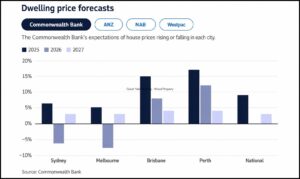
Developers already face rising construction costs, lengthy approval processes, financing constraints, state and local taxes and changing regulatory requirements. A weak or falling property market can also make owner-occupiers and investors reluctant to commit to an apartment that may not be completed for several years.
Against that background, reducing any legitimate source of pre-sale demand can make a difficult apartment project feasibility even harder.
It is a contradiction worth examining. Governments are using negative gearing and capital gains tax concessions to encourage investors into new developments while simultaneously removing one financing pathway used by a category of those investors.
If Australian governments genuinely want 1.2 million new homes, every proposed tax, planning or finance rule should be stress tested to see if it will help or hinder construction of new homes.