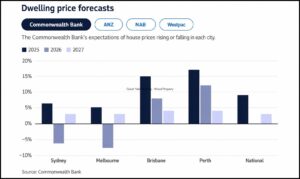

It looks increasingly likely the May Federal Budget will include a reduction to capital gains tax (CGT) exemptions and potentially negative gearing concessions. While not exclusively a property tax CGT is a big part of the property investment landscape.
It’s also likley any changes to CGT in the 12th May budget will be “grandfathered”. This means currently held assets will continue to enjoy the existing concessions. (I assume a property owned today but moved from PPR to an investment post the changes won’t enjoy the old rules but let’s see).
Some may recall 20th September 1985 as the date CGT was introduced by the Hawke / Keating government. Investment assets held prior to that date were CGT exempt and remain so today. This created a “lock in” effect where existing investors were reluctant sellers. They had a special asset that enjoyed a significant CGT exemption. Why sell and lose that benefit? People buying after that date felt disadvantaged so held back. Over time this “have and have not” distinction washed out.
Prime Minister Anthony Alanese is addressing a mining breakfast in Perth today (Wednesday) and is expected to sell the case for changes to CGT citing social cohesion and intergenerational equality as the driving force behind the changes.
While we don’t know what exactly the changes will be yet, we can opine on the likely impact based on the current market sentiment and similar changes historically.
For the Melbourne apartment market, the most important issue may not just be the headline tax change itself, but how it is applied.
If the Government “grandfathers” existing investment owners, allowing them to retain the current tax treatment, while applying new rules only to future investors, Australia could again see a two-tier investment market. Existing landlords would own properties under one set of rules. New investors would buy under another.
Thinking back to the 1985 Hawke / Keating changes, investors who held assets under earlier arrangements often became reluctant sellers. Why sell a property that carries a more favourable tax treatment than anything you could buy post the changes? The result was a cohort of owners who were not necessarily holding because the asset was perfect, but because the tax position was too valuable to give up.
If we overlay that landscape to the current housing market it means two things.
Firstly there will be less sellers given people will hold the protected asset for longer. It’s the same situation where older people are reluctant to downsize as they don’t want to pay stamp duty. Consequently they take up more real estate than they need which is an underutilisation of housing resources. Less sellers means upward pressure on prices for a while until the tax changes wash through the market.
Secondly we will see less new investors. Already a rare buyer type in Victoria, property investors will be further disincentivised to buy. Less investment buyers means less rental property which pushes up rents. The government once again is punishing renters and owners.
Melbourne’s rental market is already tight. Recent market reporting shows Melbourne unit rents have continued to rise, with Domain reporting the average asking rent for a Melbourne unit at $600 per week in the March 2026 quarter, above the average for houses.
There is also an obvious but important point often lost in the CGT tax debate. CGT only applies where there is a capital gain. Calculation of the capital gain base may also include an inflation index as it has in the past. The entire debate and forecast assumes a property’s value rises over time. For some Melbourne apartments, the return is more annual than capital. In other words many Melbourne apartments are enjoying strong rental returns but low capital return.
If negative gearing is left alone in May and only CGT tweaked, this may leave apartment investors less impacted by the changes.
Other potential changes to CGT include varying its application to new vs existing property to encourage new builds. I don’t think CGT is the missing link to unlocking the challenges facing the residential development and construction market. Such a rule will have negligible impact on new housing construction.
Property markets do not respond to policy in neat, theoretical ways. Investors respond to incentives, and sometimes to the removal of incentives. If the new system makes existing owners more likely to hold and new investors less likely to buy, the immediate effect may be a tighter market, not a freer one.