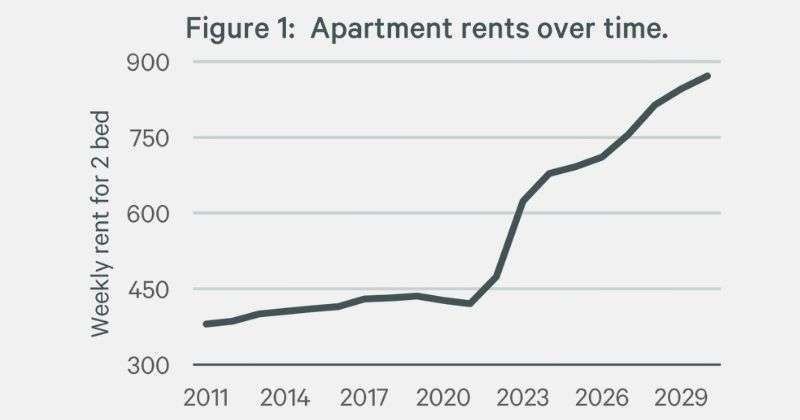
Apartment Rents are set to rise by 24% and more between 2025 and 2030 according to CBRE. This is widespread across 53 precincts in Australia. It will be driven by a continued tightening of vacancy rates across all capital cities, including Melbourne.
CBRE’s latest Apartment Vacancy & Rent Outlook H2 2025 outlines a measured but notable shift in the apartment rental market. While headlines may focus on rising rents, the report points to deeper structural imbalances between supply and demand that are gradually reshaping Melbourne’s rental landscape.
In Nov 2023 CBRE forecast 30% growth over the ensuing 5 years which felt incredible at the time but is now bearing out.
We saw more rental growth evidence emerge in March 2024 from ABS and others
Vacancy Rates: A Steady Decline
According to CBRE, Melbourne’s apartment vacancy rate will decline from 2.1% in 2024 to 1.4% by 2030. This reflects a market where demand continues to outpace new supply, due to population growth and lifestyle preferences which sustain interest in well located, high amenity apartments.
While these figures point to a tightening market, Melbourne vacancy rates are not expected to reach the ultra-low levels currently seen in some parts of Sydney. Melbourne maintains a more diversified apartment market, which may help moderate some of the extreme pressures seen elsewhere.
Supply Constraints: A Persistent Challenge
The report estimates Melbourne needs approximately 38,000 new dwellings per year to meet demand. However, forecast completions for apartments sit at just 9,000 per annum, highlighting an ongoing supply shortfall.
This gap stems from a mix of factors, including elevated construction costs, planning delays and cautious sentiment among developers. While several initiatives aim to streamline approvals and encourage new supply, these are yet to have a material impact on medium-term forecasts.
Rent Growth Outlook
Across Australian capital cities, CBRE expects median apartment rents to grow by 24% over the five years to 2030. In practical terms, the report suggests that by the end of the decade, 92% of two-bedroom apartments could be renting above $700 per week, with one third potentially exceeding $1,000 per week.
In Melbourne, newly built apartments already attract rents about 30% higher than older stock. That differential may widen, particularly in precincts with access to transport, retail, education and employment hubs.
Renting vs Buying
Even with rising rents, CBRE notes that in many cases, renting remains more cost effective than buying. The ongoing impact of higher interest rates (vs 2 – 3 years ago) and the total cost of home ownership means renting can be 30% – 40% cheaper in several locations. This cost dynamic is helping sustain demand in the rental sector, particularly among younger households and those prioritising lifestyle flexibility.
Institutional Interest and BTR
CBRE forecasts that Build-to-Rent (BTR) projects could represent around 10% of new apartment supply nationally over the next five years. While this marks a shift in how apartments are delivered and managed the scale of BTR remains relatively modest.
BTR projects offer benefits such as greater lease certainty, professional management and high-quality amenities. However, their contribution to overall supply is unlikely to significantly alter vacancy or rent trajectories in the near term.
BTR caters to the very top end of the rental market only with rent premiums of 5%-15%.
Outlook for Melbourne
For investors, the outlook remains positive in most precincts. Well designed, well-located apartments continue to attract strong tenant demand and rising rents, supporting both yield and capital value. However, not all assets will benefit equally. Older stock in less connected areas may underperform, particularly if maintenance and amenity fall behind tenant expectations.
For renters, conditions are expected to remain competitive. While overall affordability remains better than Sydney, reduced vacancy and rising rents will continue to present challenges, especially for lower income households.
Where to from here
CBRE’s outlook points to a steady evolution of Melbourne’s apartment rental market, shaped by structural supply constraints and resilient demand. The projected rental increases are significant but reflective of broader market imbalances rather than short-term volatility.
As always, outcomes will vary across sub-markets. Location, building quality and access to infrastructure will continue to define performance for both landlords and tenants.
Overall, the report reinforces the importance of policy focus on medium density housing supply and planning efficiency to support a balanced and functional rental market in the years ahead.